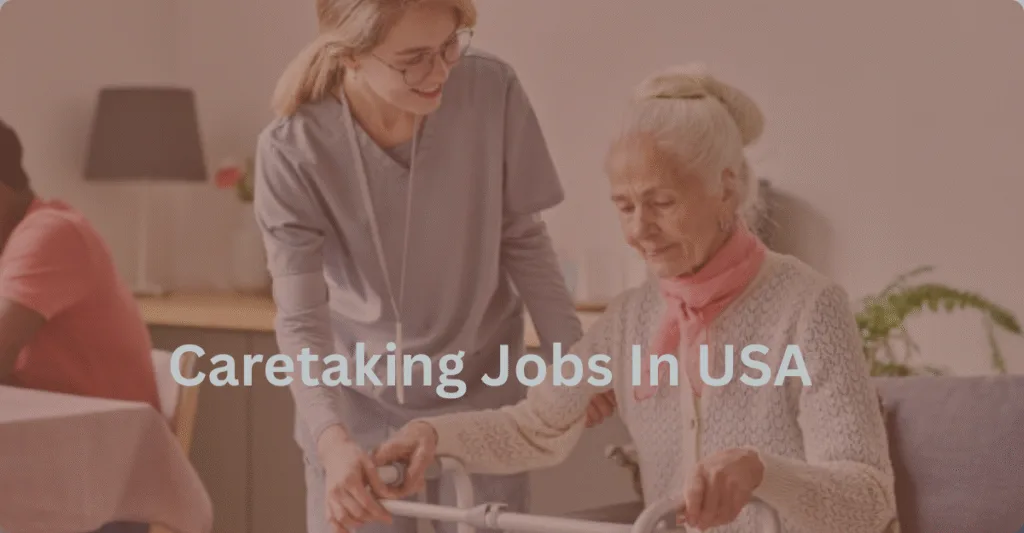
The United States continues to experience a growing demand for healthcare professionals, particularly in caregiving and nursing roles. With an aging population and continual expansion in healthcare services, jobs such as caregiving and nursing are among the most in-demand occupations that offer pathways to employment with visa sponsorship.
For many international professionals, including those from Africa, Asia, and Latin America, the opportunity to work in the U.S. with a $150,000 Visa Sponsorship Grant represents a life-changing career move.
This in-depth article is a full guide that will walk you through everything you need to know about nursing jobs in USA with visa sponsorship, including eligibility, legal requirements, application strategies, insurance, relocation logistics, and how to successfully secure caregiver jobs in USA in 2026.
Understanding the Market for Caregiving and Nursing Jobs in USA
Contents
- 1 Understanding the Market for Caregiving and Nursing Jobs in USA
- 2 Major USA Job Categories with Visa Sponsorship 2026
- 3 What Is the $150,000 Visa Sponsorship Grant?
- 4 Reasons Why Employers Offer These Grants in USA
- 5 Legal Framework; Visa Sponsorship and Caregiving/Nursing Laws in 2026
- 6 Eligibility and Qualifications Required
- 7 Step-by-Step Guide to Apply for Caregiving Jobs in USA 2026
- 8 Healthcare Visa Sponsorship Insurance Detailed Explanation
- 9 Nurse Relocation to USA 2026 and Expectations
- 10 Common Challenges and How to Overcome Them
- 11 Career Growth and Long-Term Opportunities
- 12 Conclusion
- 13 Author
Demand Drivers in U.S. Healthcare
The healthcare sector in the United States is rapidly expanding due to:
- An aging population requiring long-term care
- Increased incidence of chronic health conditions
- Rising demand for home and community-based care services
As a result, there is unprecedented demand for both caregiver jobs in USA 2026 and registered nurses. Healthcare facilities, home care agencies, and assisted living communities actively seek international professionals to fill workforce shortages.
Major USA Job Categories with Visa Sponsorship 2026
International applicants commonly pursue the following sponsored roles in the United States:
- Registered Nurse (RN)
- Licensed Practical Nurse (LPN) / Licensed Vocational Nurse (LVN)
- Certified Nursing Assistant (CNA)
- Home Health Aide (HHA)
- Personal Care Aide
Among these, nursing jobs in USA with visa sponsorship tend to offer the most fluent immigration pathways and higher salary potential.
What Is the $150,000 Visa Sponsorship Grant?
The term “$150,000 Visa Sponsorship Grant” refers to financial assistance programs, employer-subsidized relocation offers, or state-specific healthcare workforce incentives that assist qualified professionals to obtain employment and relocation assistance to the U.S. These may include:
- Employer cash relocation packages
- Signing bonuses
- Grants for credential evaluation and immigration processing
- Partial coverage of immigration or legal fees
Although not a direct U.S. government cash grant for immigration, many healthcare employers partner with state and federal workforce programs to support international hires with combined financial incentives totaling up to or exceeding $150,000 in value.
Reasons Why Employers Offer These Grants in USA
Healthcare facilities often incur high costs when recruiting internationally due to the following reasons:
- Visa petition fees
- Immigration legal costs
- Credentialing and licensing evaluations
- Travel and relocation expenses
- Orientation and training costs
To make international recruitment competitive, employers may structure incentive packages that support candidates with significant relocation and transition costs.
Legal Framework; Visa Sponsorship and Caregiving/Nursing Laws in 2026
This section is essential for you as an international applicant pursuing healthcare visa sponsorship in the U.S. in 2026, so make sure to read and digest as much as possible.
U.S. Immigration Basics for Healthcare Workers
For most international professionals, working legally in the U.S. requires employer sponsorship of a non-immigrant or immigrant visa. The most common pathways include:
- H-1B Visa: Speciality occupations, including Registered Nurses (if BSN degree holders qualify under specialized roles)
- EB-3 Immigrant Visa: Skilled workers and professionals
- TN Visa: For Canadian and Mexican professionals under USMCA (applicable to certain healthcare roles)
- H-2B Visa: Temporary non-agricultural workers (occasionally used for caregiver placements)
Globally, healthcare institutions preferring long-term employment typically sponsor EB-3 for nurses and registered caregivers.
Caregiving/Nursing Laws in 2026: Key Regulations You Should Know
By 2026, the regulatory landscape in U.S. healthcare employment will continue to emphasize:
Licensing and Credential Recognition
- Nurses must pass the National Council Licensure Examination (NCLEX) to be licensed in a U.S. state.
- Foreign credentials are evaluated by approved credentialing services (e.g., CGFNS, FCCPT).
Workplace Safety and Standards
- Employers must comply with Occupational Safety and Health Administration (OSHA) requirements for healthcare workers.
- Background checks and health screenings are mandatory.
Immigration Compliance
- Employers must attest to fair labor standards in Form I-129 and PERM labor certification for immigrant visas.
USA Visa Sponsorship Insurance Requirements
International healthcare workers may need to demonstrate adequate visa sponsorship insurance coverage to protect both themselves and their employers against liability and ensure compliance with U.S. health insurance mandates.
Here are the complete requirements you must meet corresponding to the USA Visa Sponsorship Insurance in 202.
Eligibility and Qualifications Required
1. Academic and Professional Requirements
To be considered for nursing jobs in USA with visa sponsorship, candidates generally need:
- A recognized nursing degree or diploma equivalent to U.S. standards
- Passing scores on NCLEX-RN or NCLEX-PN (for nurses)
- Certification where applicable (e.g., CNA, HHA certifications for caregivers)
For caregiver roles, some employers may accept on-the-job training or certificates from recognized home health aide programs.
2. English Language Proficiency
Effective communication skills in English are essential. Many employers require:
- TOEFL (Test of English as a Foreign Language)
- IELTS (International English Language Testing System)
These scores are used to demonstrate the ability to communicate with patients and healthcare teams.
Step-by-Step Guide to Apply for Caregiving Jobs in USA 2026
This is the core procedural segment for securing caregiving or nursing employment with U.S. visa sponsorship. This section will show you the direct and straightforward step-by-step guide you can follow to apply for a caregiving Job in USA 2026:
Step 1: Research Employers Offering Visa Sponsorship
Prioritize employers that:
- Have a history of sponsoring international healthcare workers
- Offer relocation assistance or grant packages
- Partner with recruiters or workforce programs for international hiring
Examples include large health systems, hospital networks, and home care agencies.
Step 2: Prepare and Evaluate Your Credentials
Most employers require:
- Credential evaluation by agencies such as CGFNS or WES
- Copy of academic transcripts
- Professional work experience documentation
Credential evaluation determines the U.S. equivalency of your academic and professional history.
Step 3: Register and Prepare for Licensure Exams
If applying for nursing jobs in USA with visa sponsorship, you must:
- Register with the state’s Board of Nursing
- Schedule and pass the NCLEX
- Submit verification of foreign education
For caregiver roles, certain states require competency assessments or state-specific certifications.
Step 4: Submit Job Applications
Submit tailored applications to employers, highlighting:
- International qualification status
- Visa sponsorship eligibility
- Licensing progress
- Willingness to relocate
Use job boards, professional networks, LinkedIn, and dedicated healthcare recruitment platforms.
Step 5: Prepare for Interviews
When interviewing for caregiver or nurse roles:
- Practice common healthcare interview questions
- Emphasize interpersonal skills, cultural adaptability, and caregiving experience
- Clarify willingness to relocate and commitment to obtaining U.S. licensing
Step 6: Employer Offers and Visa Petition Filing
Once you receive a job offer:
- Employer initiates the visa petition (H-1B or EB-3)
- PERM labor certification may be required
- USCIS processing begins
- You apply for a visa stamping at a U.S. consulate
Remain in close communication with your employer’s HR and legal teams.
Healthcare Visa Sponsorship Insurance Detailed Explanation
International workers must often show visa sponsorship insurance coverage as part of the immigration and relocation process.
Why Insurance Matters?
Insurance matters because it protects:
- The employee (healthcare workers)
- The employer (liability and immigration compliance)
- U.S. healthcare institutions against claims
Common required insurance includes:
- Health Insurance
- Professional Liability Insurance (Malpractice)
- Workers’ Compensation Coverage
Health Insurance and Immigration Compliance
Before entering the U.S., ensure that your health insurance plan:
- Meets minimum essential coverage
- Satisfies state mandates where you will reside
- Covers emergency and routine care
Lack of adequate coverage may delay visa issuance.
Nurse Relocation to USA 2026 and Expectations
Once your visa is approved and your job offer finalized, relocation is the next major phase. Below are what you are to expect and be ready for:
1. Travel and Housing Logistics
Plan for:
- Flight bookings and arrival arrangements
- Temporary housing if permanent residence is delayed
- Transportation from the airport to your destination
2. Orientation and Onboarding
U.S. healthcare employers typically provide:
- Orientation sessions on the U.S. healthcare system
- Training on electronic health records (EHR)
- Cultural competency workshops
3. Financial Planning
Budget for the following:
- Initial living expenses
- Deposit costs for housing
- Licensing or membership dues
- Daily commuting costs
Even with generous relocation assistance or a $150,000 Visa Sponsorship Grant, disciplined financial planning helps ensure a smooth transition.
Common Challenges and How to Overcome Them
1. Licensing Delays
Issue: Delays in NCLEX scheduling or state board approvals
Solution: Apply early and track licensing progress consistently.
2. Visa Processing Times
Issue: Long processing times for EB-3 or H-1B visas
Solution: Work closely with employer legal teams to expedite where possible and prepare all documents early.
3. Cultural and Workplace Adaptation
Issue: Adapting to U.S. healthcare culture
Solution: Engage in cultural orientation programs and mentorship opportunities after arrival.
Career Growth and Long-Term Opportunities
Caregiving and nursing in the USA offer not just immediate employment but long-term career prospects, including:
- Permanent residency pathways through EB-3
- Advanced specialty certifications
- Leadership and management roles
- Educational opportunities in the U.S.
Conclusion
Securing caregiver jobs in USA in 2026 with healthcare visa sponsorship and a strategic relocation grant, such as the $150,000 Visa Sponsorship Grant can be a transformational career step. With strong demand for healthcare professionals, a well-prepared application, and a comprehensive understanding of visa requirements and insurance policies, qualified international professionals can successfully transition to rewarding roles in the United States.
Start by evaluating your qualifications today, prepare documentation, and pursue opportunities with confidence. With persistence and the right approach, landing a sponsored nursing or caregiving role in the U.S. is well within reach.

Farming
Yakubu Dahiru
I need this reward